





Professional analysis reveals clear distinctions between amateur and pro scenes. This listicle explores ten key differences that highlight aspects such as skill levels, production quality, and audience engagement, offering insights into what sets professional productions apart from amateur efforts.
Strategic Depth and Planning
Basic Tactical Execution
Amateurs often focus on immediate actions without a broader game plan, leading to reactive play. Basic tactical execution involves understanding fundamental moves and counters, which can suffice in casual settings but falters against seasoned players. Professionals, however, display a clear vision and adaptability. Each move aligns with an overarching strategy, enhancing their ability to anticipate opponents’ actions.
Execution accuracy defines amateurs who sometimes execute basic moves incorrectly. Professionals maintain precision, ensuring every action contributes to their strategic goals. This difference highlights a reliance on instinct versus a well-defined tactical framework, which leads to more coherent gameplay.
Complex Macro Strategies
Macro strategies encompass long-term planning that influences the entire game flow. Amateurs may concentrate on moment-to-moment interactions, ignoring broader objectives. Professionals integrate resource management, map control, and opponent tendencies into their strategies, allowing for a structured progression towards victory.
Understanding complex macro strategies requires a comprehensive grasp of both game mechanics and psychological elements. Professionals analyze various scenarios and predict outcomes, adjusting their plans accordingly. This adaptability, cultivated through experience, sets them apart from amateurs, who often lack such foresight.
Complex macro strategies shape a player’s approach over the course of a match. These strategies involve creating opportunities based on resource allocation and opponent weaknesses. Professionals study previous games, fine-tuning their approaches by examining patterns and performance data. This extensive preparation contrasts sharply with amateur players who primarily react to the immediate game environment. Such depth in planning not only optimizes performance but also enhances decision-making under pressure.

Practice and Preparation Time
Casual Gaming Sessions
Casual gaming sessions often prioritize enjoyment over performance, with players engaging for fun rather than competitive improvement. These sessions lack the rigorous structure found in professional training and typically involve sporadic play without specific goals.
Such informal interactions can still enhance skills to a degree. Players may improve reaction times, develop game knowledge, or build teamwork through relaxed competition and socialization.
Structured Full-Time Training
Structured full-time training is imperative for those pursuing a professional career. This approach demands rigorous schedules that include practice, strategy meetings, and performance analysis. Players work on specific skills, routines, and mindsets to prepare rigorously for competitions.
This method involves a detailed regimen, often including physical fitness, mental conditioning, and personalized coaching. A well-organized training program allows players to refine their techniques and adapt to various competitive scenarios, emphasizing the importance of consistency and dedication in achieving professional success.
Financial Support and Sponsorships
Self-funded hobbyist play
Amateur players often finance their activities through personal funds. Costs include equipment, travel, and entry fees, which can add up quickly. A strong passion for their craft drives many to invest their own money without expectations of financial return.
This self-funding model allows for greater creative freedom. Hobbyists can focus on personal growth and enjoyment rather than commercial success, cultivating a genuine love for the activity.
Massive corporate backing
Professional scenes thrive on substantial financial support from corporate sponsors. These sponsors provide funding for events, equipment, and promotional activities, significantly boosting the visibility and scale of performances. In return, companies gain marketing exposure and brand loyalty through association with successful figures.
Corporate sponsorships can bring unparalleled resources to professionals, enabling them to access high-quality equipment and training. This backing leads to lavish tournaments, substantial prize pools, and advanced marketing strategies. Players often secure contracts that elevate their standing in the community while contributing to the overall growth of the scene.
Mechanical Skill and Precision
Inconsistent Technical Execution
Amateur scenes often display varying levels of technical execution. This inconsistency arises from limited practice and a lack of formal training. Errors in timing, alignment, and movement are common, affecting overall performance quality.
Challenges in coordination can lead to unpredictable results. When technical skills are not uniformly applied, moments of brilliance get overshadowed by noticeable mistakes, detracting from the overall impact of the scene.
Near-Perfect Mastery
Professional performers exhibit near-perfect mastery of their craft, often achieving a level of technical consistency that sets them apart from amateurs. This mastery results from extensive training, experience, and a deep understanding of the mechanics involved in their performance.
Practiced techniques enable professionals to execute complex movements with precision and confidence. This level of skill contributes to smoother transitions and a more visually engaging performance, allowing the audience to become fully immersed in the experience.
Communication and Team Synergy
Minimal Verbal Coordination
Amateur scenes often rely on minimal verbal coordination among team members. Players may use hand signals or non-verbal cues but often lack structured communication methods. This can lead to confusion and misalignment during critical moments.
Inconsistent communication can hinder performance. Team members might misinterpret each other’s intentions, resulting in missed opportunities and breakdowns in execution. Clear, direct communication is rarely established, affecting overall synergy.
Professional Communication Protocols
Professional scenes implement structured communication protocols to enhance team synergy. Each member understands their role and has established channels for feedback, allowing for real-time adjustments. Communication often includes specific terminology and pre-determined signals.
Successful professionals create an environment that fosters clarity and efficiency. Regular debriefs and rehearsals help solidify communication strategies, ensuring that every member can respond effectively, whether in rehearsals or live performance. This reliability reduces errors and enhances collective performance.
Coaching and Analytical Support
Individual Self-Improvement
Amateur athletes often lack access to tailored coaching, relying instead on self-study and informal guidance. This limited support can hinder skill growth and overall performance. Pro athletes, however, benefit from personalized training regimens designed to address specific weaknesses and develop strengths efficiently.
Pro-level coaching also emphasizes mental conditioning, helping athletes manage pressure and maintain focus. Self-improvement in this setting is more structured, integrating ongoing assessments and feedback that track progress over time.
Dedicated Analysis Staff
Amateur scenes typically see minimal analytical support, leaving athletes to assess their performance through trial and error. Pros, on the other hand, have dedicated teams that analyze performance data, providing insights that inform strategy and training decisions. This type of analysis plays a significant role in competitive success.
Dedicated analysis staff utilize technology like video breakdowns and performance metrics to identify patterns and areas for enhancement. Their expertise allows for objective assessments, creating a data-driven approach to training. This rigorous analysis ensures that professional athletes remain competitive by continually refining their skills based on evidence rather than intuition. Such resources are a hallmark of the professional scene, bridging the gap between potential and performance.
Mental Resilience and Pressure
Easily Affected by Tilt
Amateur players often struggle with tilt, where emotional responses to setbacks negatively impact performance. The inability to reset after a loss can lead to poor decision-making and decreased game focus. Emotional swings can cloud judgment, causing players to make rash moves, further entrenching them in a losing cycle.
Elite Psychological Conditioning
Professional players undergo rigorous psychological training to develop mental fortitude. Techniques include visualization, mindfulness, and routine-based performance strategies. These methods help avoid distractions and maintain concentration under pressure. By integrating mental preparation into their training, pros can sustain high performance in high-stress situations, a capability that often distinguishes them from amateurs.

Equipment and Infrastructure
Standard Home Setups
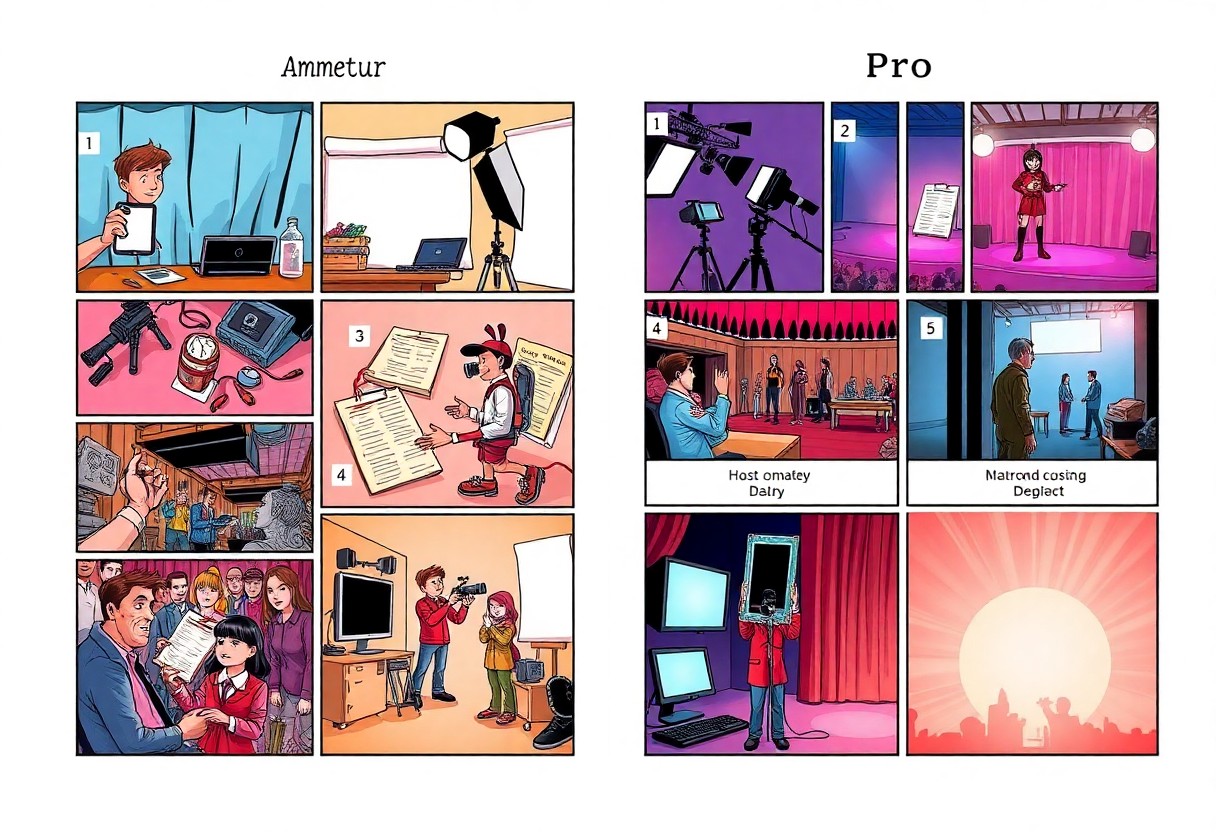
Amateurs typically rely on home setups that may include basic equipment like entry-level cameras, microphones, and lighting. These setups often cater to individual needs and budgets, lacking the advanced features found in professional environments. Simple software for editing and streaming is common, limiting production quality.
In contrast, professional setups consist of high-quality cameras, studio lighting, and specialized sound equipment. A well-designed space enhances the overall production value, allowing pros to create content that meets industry standards. The investment reflects the seriousness of their craft and dedication to delivering polished outputs.
Specialized Training Facilities
Professional scenes often utilize specialized training facilities designed for optimal performance. These spaces can include advanced equipment such as simulators, motion capture technology, and sound stages, providing an immersive training experience. Amateurs typically lack access to such facilities, hindering their ability to refine their skills effectively.
Specialized training facilities provide a tailored environment for serious athletes or performers. These centers offer advanced coaching, state-of-the-art equipment, and analysis tools that track performance metrics. Participants benefit from structured training programs that capitalize on real-time feedback, facilitating improvement in techniques and overall performance. Access to such resources sets professional sequences apart from amateur experiences.
Networking and Visibility
Local community reach
Amateurs typically engage within their local networks, forming bonds with friends, family, and local organizations. These connections can lead to opportunities for informal collaborations and word-of-mouth promotion.
Pro scenes benefit from established relationships within their communities and often have access to more significant local events. They utilize these connections to enhance visibility, joining local initiatives, and being featured in community projects.
Global media exposure
Amateurs usually find limited exposure, often relying on social media platforms to share their work, which restricts their reach. They typically create content with a localized audience in mind, missing out on broader opportunities.
Professionals attract global media attention through strategic PR efforts, partnerships with established brands, and participation in international events. This exposure elevates their profiles and broadens their audience significantly, making them prominent figures in their fields.
Professional scenes often capitalize on global media exposure by collaborating with influencers and participating in worldwide festivals or competitions. Such activities not only enhance visibility but also validate their work in a competitive market, establishing their reputation on an international scale.
Career Stability and Longevity
Short-term Hobby Interest
Amateur scenes often attract individuals pursuing a temporary passion. These participants engage in activities primarily for enjoyment and self-expression, without long-term commitments. The lack of pressure allows for a relaxed atmosphere, fostering creativity and exploration.
As hobbyists often juggle other responsibilities like jobs or education, their involvement may fluctuate. This can lead to inconsistent participation, impacting skills development and overall growth within the scene.
Long-term Professional Contracts
Professional scenes typically involve structured agreements that ensure stability and financial support for participants. Long-term contracts provide a secure income stream, enabling athletes or performers to focus exclusively on their craft and skill enhancement. Such commitments also foster deeper professional networks and collaborations.
These contracts often include not only financial compensation but also benefits like training resources, medical support, and promotional opportunities. This long-term vision cultivates a dedicated environment where professionals can thrive, invest in their abilities, and contribute to higher standards within their industry.
Final Words
Summing up, the analysis of the differences between amateur and professional scenes reveals key distinctions in skill levels, production quality, and audience engagement. Professionals typically exhibit higher technical proficiency and consistency, leading to more polished outputs. Understanding these variances provides valuable insights for aspiring creators aiming to transition from amateur to pro.
Professional scenes prioritize industry standards and market trends, while amateur settings often embrace experimentation and creativity. By recognizing these characteristics, individuals can adjust their approaches to better align with their aspirations and the expectations of potential audiences.
Q: What are the main differences in production quality between amateur and professional scenes?
A: Professional scenes typically have higher production quality, featuring advanced equipment, skilled technicians, and higher budgets. Amateur scenes may use basic equipment and lack professional editing, leading to noticeable differences in sound and visual quality.
Q: How does the level of experience affect performances in amateur versus professional scenes?
A: Experienced professionals bring refined skills and techniques that enhance performances, contributing to more compelling and engaging content. Amateur performers may lack this level of skill, which can result in less convincing portrayals and disengagement from the audience.
Q: How do audience engagement and marketing strategies differ between amateur and professional scenes?
A: Professional scenes often employ targeted marketing strategies, utilizing analytics and audience feedback to engage viewers more effectively. Amateur scenes might rely on social media visibility without the same depth of strategy, resulting in varied audience reach and retention.