





Dota2’s The International showcases the top-tier talent in competitive gaming. This post outlines the tournament’s structure, including the various stages and qualification paths, ensuring players and fans comprehend how teams earn their place in this prestigious event.
The Historical Evolution of The International
The Inaugural Tournament and the Million Dollar Milestone
The first International took place in 2011, marking a transformative moment in esports. With a prize pool of $1 million, it attracted significant attention and showcased Dota 2’s potential as a competitive platform.
The Growth of the Compendium and Crowdfunding Era
The introduction of the Compendium in 2013 revolutionized tournament funding. Players could purchase this in-game item, directly contributing to the prize pool, which sparked a crowdfunding phenomenon.
This innovation fostered a sense of ownership among fans, making them active participants in the competitive scene rather than mere spectators. The community’s financial backing led to record-breaking prize pools, transforming The International into a key event not only for players but also for the entire gaming community.
Transitioning from the Dota Pro Circuit (DPC) to the Modern Era
The Dota Pro Circuit introduced a structured qualification system in 2017, providing teams with more consistent opportunities to compete for a spot at The International. This era marked a shift towards organized regional leagues and points accumulation.
The Direct Invitation System
Performance Metrics and Major Tournament Standings
Performance metrics play a pivotal role in determining the teams that receive direct invitations to The International. These metrics include win-loss records, match performances, and overall consistency in major tournaments throughout the Dota 2 season. Success in significant events dramatically influences a team’s placement in the rankings, creating a competitive edge for those who perform well.
Major tournament standings also factor heavily into the selection process. Teams that place highly in events like the Major Championships gain recognition and credibility, thus increasing their chances of receiving an invited spot. Performing consistently against top-tier competition contributes to the overall evaluation and perceived skill level of a team.
The Role of Professional Consistency Throughout the Competitive Year
Consistency is key for teams looking to secure direct invitations. Performance across various tournaments influences the perception of a team’s skill and adaptability. Teams that maintain a steady upward trajectory are often favored over those with sporadic successes.
Maintaining a stable lineup and performing well throughout the competitive year directly impacts invitation prospects. Teams that exhibit growth and cohesiveness during the season demonstrate their ability to compete at the highest level, making them more attractive candidates for direct invitations.
Valve’s Selection Criteria for Premier Tier Teams
Valve employs a multifaceted approach in selecting premier tier teams. This involves evaluating team performance, consistency in attendance, and significant achievements in high-stakes matches. Teams with a history of strong finishes at major tournaments are more likely to receive invites.
Clear criteria emphasize the importance of notable performances in prestigious tournaments. A team’s ability to adapt to the evolving meta and maintain a competitive edge throughout the season enhances its candidacy for direct invitations, ensuring that only the most consistent teams are recognized.

Regional Qualifiers: The Path for Contenders
Geographic Distribution of Slots: Europe, China, SEA, and the Americas
Regions have defined slots for qualification, influencing team representation at The International. Europe typically enjoys a larger quota, reflecting its competitive scene’s depth, while China follows closely, bolstered by a rich history in Dota 2. Southeast Asia and the Americas receive fewer slots, but the intensity of competition remains high, giving rise to potential dark horses.
This distribution emphasizes not only the competitive landscape but also the need for teams to consistently prove themselves. As viewers and players keep an eye on emerging teams, this geographic allocation fuels ongoing rivalries and aspirations across the globe.
Open Qualifiers: The “Grassroots” Entry Point for Aspiring Pros
Open qualifiers serve as the entry point for numerous aspiring professionals, creating opportunities for lesser-known teams to shine. This inclusive format allows anyone to register, promoting competition among diverse talent. Organized in multiple rounds, teams battle through elimination matches, generating a thrilling experience for fans and participants alike.
Many successful players have transitioned from the open qualifiers to top-tier teams, underscoring the importance of this process. While the road is challenging, those who excel can secure a place in the coveted closed qualifiers, marking a significant step toward The International.
Closed Qualifiers: Format, Seeding, and Double-Elimination Mechanics
Closed qualifiers incorporate a more structured approach, featuring seeding based on previous performances and rankings. Teams are pitted against one another in a double-elimination format, allowing them a second chance to make it through after a loss. This format enhances competitiveness, as teams cannot afford any slip-ups.
Requiring skill and strategy, closed qualifiers determine which teams will advance to The International. The format ensures that only the strongest contenders emerge, making every match critical in the quest for the title.
Closed qualifiers are designed to reward preparation and adaptability, where teams must demonstrate their mettle against top competition. The double-elimination format also creates high-stakes scenarios, pushing teams to engage in strategic planning and in-game adjustments to secure their spot at The International.
Roster Stability and Player Eligibility Rules
Roster Lock Deadlines and Registration Procedures
Teams must adhere to specific roster lock deadlines to ensure competitiveness during The International season. Registered lineups must be finalized well in advance to prevent any last-minute changes that could disrupt team synergy. Typically, these deadlines align with tournament stages, necessitating timely preparation from teams.
Registration procedures involve submitting player information through the official platform. Each team’s roster must be verified for compliance with eligibility guidelines. Inaccuracies or delays can result in disqualification, emphasizing the importance of a thorough registration process.
Regulations Regarding Stand-ins and Emergency Substitutions
Stand-in regulations allow teams to substitute players for specific matches, ensuring that they can still compete even if a primary member is unavailable. Emergency substitutions are permitted under specific circumstances, such as illness or personal matters, requiring official approval from tournament organizers.
Teams utilizing stand-ins must ensure that substitutes meet eligibility criteria, which includes prior tournament participation and ranking requirements. Failure to comply can lead to disqualification or match penalties.
Stand-ins can significantly influence match outcomes, making clear regulations necessary. Teams must maintain transparency when utilizing substitutes to uphold the integrity of the tournament while ensuring fair competition.
Penalties for Mid-Season Roster Changes and Point Deductions
Mid-season roster changes often incur penalties, which can affect a team’s overall standings. Specific guidelines dictate when and how changes can be made, typically resulting in point deductions for unauthorized adjustments. Adhering to these rules is crucial for maintaining competitive fairness.
Fines and adjustments to standings serve as deterrents against frequent roster changes. Consistency is key in competitive play, and these regulations ensure that teams invest in stable lineups for the duration of the season.
Teams facing mid-season roster changes should approach with caution as penalties can derail their qualification hopes. Understanding these regulations helps maintain competitive integrity and encourages teams to prioritize stability throughout the season.
Group Stage Structure and Seeding
Group Allocation and the Round-Robin Methodology
Teams are assigned to groups through a seeding process that considers past performance and rankings. With eight teams in each group, a round-robin format ensures every team competes against all others, fostering competitive balance.
This methodology not only sharpens skills but also highlights the strengths and weaknesses of each team. The outcome of these matches plays a pivotal role in determining which teams advance to the next stage of the tournament.
The “Road to the Main Event” Decider Matches
Decider matches offer a thrilling conclusion to the group stage, where teams vying for elimination or advancement face off. These critical matches often create high-stakes situations, intensifying the competition as teams grapple for their tournament lives.
Survival often hangs in the balance, leading to strategic plays and unexpected outcomes. The best performers from these matches claim their spot in the main event, adding a dramatic flair to the tournament’s narrative.
Decider matches serve as a culmination of the group stage, bringing excitement and unpredictability. The intensity of these matches showcases the resilience and adaptability of teams, contributing significantly to the fan experience and overall tournament atmosphere.
Tie-breaker Scenarios and Statistical Analysis for Advancement
Tie-breaker scenarios arise when teams finish the group stage with identical records. To resolve these situations, a series of statistical analyses-including head-to-head results, game differential, and total wins-help determine advancement.
Understanding these algorithms is imperative for fans and teams alike, as they illuminate how placement decisions are made. Such transparency enhances the integrity of competitive play, reassuring participants that every match counts.
Statistical analyses are meticulously applied to ensure fairness in tie-breaker scenarios. The complexity of these calculations underscores the tournament’s competitiveness, ensuring that even the closest contests yield clear decisions on which teams advance.
The Main Event: Bracket Dynamics
Upper Bracket Advantage and the Path to the Grand Finals
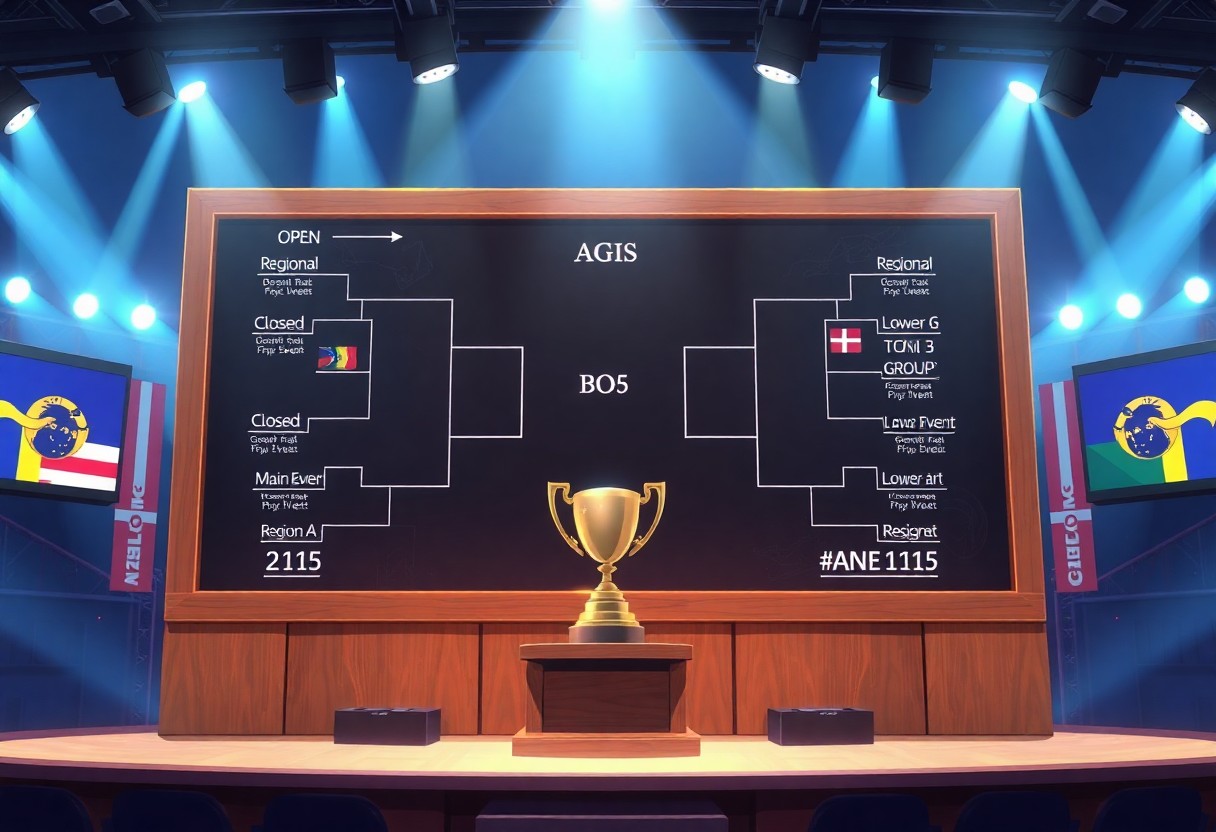
Teams starting in the upper bracket gain a crucial advantage, as they only need to lose one match before facing elimination. This format encourages aggressive gameplay, knowing that even a single defeat doesn’t end their tournament journey. Progressing through the upper bracket brings teams closer to the Grand Finals, as they can afford to regroup and strategize after any setbacks.
Winning matches in the upper bracket not only secures a better placement but also offers valuable momentum. Each victory builds confidence and ensures teams face potentially less formidable opponents leading into the final stages. The path they carve is pivotal in shaping their overall performance throughout the tournament.
Lower Bracket Survival: Navigating the Best-of-One Elimination Pressure
Teams that drop to the lower bracket face intense pressure, as every match is a potential end to their journey. These best-of-one matches amplify the stakes, requiring perfect execution with minimal room for error. Each decision becomes critical, reflecting the weight of elimination looming overhead.
Success in this environment hinges on adaptability and quick thinking. Teams must adjust to opponents’ strategies on the fly, making every match a test of both skill and mental resilience. The urgency of survival adds an electrifying layer to the competition, pushing players to their limits.
The single elimination format in the lower bracket creates a high-stakes atmosphere that demands focus and rapid strategic adjustments. Every game serves as a reflection of a team’s ability to cope under pressure, making it an exhilarating experience for both competitors and spectators alike.
Tournament Logistics: Main Stage Scheduling and Player Booths
Careful planning governs the scheduling of matches on the main stage, with each round orchestrated to maximize audience engagement and manage player fatigue. Matches are often spaced to allow for breaks and preparation, fostering a competitive environment without overwhelming the teams. Player booths are meticulously designed to ensure comfort and optimal performance, equipped with high-spec technology.
Scheduling considerations also include viewer accessibility, with peak times arranged for the most significant matches. This strategic layout keeps the excitement alive, allowing fans to witness pivotal moments in real-time. The player booths further enhance the experience by isolating competitors from distractions, ensuring they can focus entirely on their gameplay.
Prize Pool Mechanics and Financial Distribution
The Base Prize Pool and Community Contribution Breakdown
The International features a base prize pool of $1 million, guaranteed by Valve. This foundation forms the starting point for a much larger total prize pool, significantly funded by community contributions through the purchase of the Battle Pass. A percentage of each sale goes directly to enhancing the prize pool, allowing players and fans to actively participate in the event’s financial success.
This community-driven approach not only incentivizes purchases but also creates a unique dynamic where fans feel invested in the tournament’s outcome. The more Battle Passes sold, the higher the potential prize pool, which can exceed tens of millions of dollars, reflecting the global interest in the competition.
Percentage Allocation Based on Final Tournament Placement
Teams at The International are rewarded based on their performance, with a percentage of the total prize pool allocated according to their final placement. The system ensures that higher-ranking teams receive a larger share, incentivizing competitive play. The top positions typically claim substantial portions of the prize, reflecting their success and skill.
This tiered distribution means that while the champions reap the most rewards, all teams that make it to the main event still receive a financial return for their efforts, encouraging participation across skill levels.
Prize distribution at The International rewards not only the champions but also teams placing lower in the rankings, ensuring that even those who may not reach the top still receive recognition for their achievements. This structure motivates teams to strive for excellence, knowing that their investment of time and resources can lead to significant financial returns regardless of their final position.
Financial Sustainability for Lower-Tiered Participating Teams
Lower-tier teams face unique financial challenges within the competitive Dota 2 environment. While top teams typically draw significant sponsorship and viewership revenue, those further down the ranking often struggle to secure consistent funding. The prize distribution system aims to alleviate some of these pressures.
By offering a base prize pool allocation for all participating teams, The International helps ensure that even those who do not win can cover expenses. This is crucial for maintaining a healthy competitive ecosystem, enabling aspiring teams to compete without immediate financial burdens.
Financial sustainability for lower-tier teams is important to support emerging talent in the scene. By receiving guaranteed payouts, these teams gain the opportunity to invest in training, improve their skills, and work towards future competitions without the constant worry of monetary loss. This fosters a more inclusive environment within the professional Dota 2 community.
Gameplay Integrity and Competitive Fair Play
Anti-Cheat Protocols and Hardware Verification
Various anti-cheat measures are implemented to maintain fairness during The International. Players must undergo hardware verification prior to participation, ensuring that no unauthorized devices are used to gain an advantage. This process includes checks on peripherals and software to prevent cheating incidents.
Continual monitoring during matches assists in identifying any suspicious behavior. Players found violating these protocols face strict penalties, including disqualification from the event. Such rigorous scrutiny helps uphold the integrity of the competition.
Rules on Match-Fixing, Betting, and Professional Conduct
Match-fixing remains a serious offense that violates competitive integrity. All players and teams must adhere to strict guidelines prohibiting any manipulation of match outcomes for personal gain. The penalties for such actions can result in lifetime bans.
Additionally, betting policies are enforced to prevent conflicts of interest. Players are discouraged from engaging in betting activities related to Dota 2 matches to maintain a fair competitive environment. Professional conduct is rigorously monitored, ensuring that players represent the game and the community with respect.
Clear guidelines are established surrounding professional conduct, reinforcing the expectation that all participants act responsibly and ethically. Violations can lead to disciplinary action, including suspension or expulsion, ensuring that all players uphold the spirit of the game.
The Role of Admin Referees and In-Game Dispute Resolution
Admin referees play a critical role in maintaining order during matches. They are responsible for making judgment calls on rule violations and resolving disputes that may arise in-game. Their authority ensures that games proceed smoothly without undue interference.
Effective dispute resolution mechanisms are in place, allowing teams to voice concerns promptly. The admin team evaluates situations based on established rules, ensuring fair outcomes while minimizing disruption to gameplay.
Admin referees function as impartial mediators, guaranteeing that all player concerns are addressed appropriately. Their presence helps to maintain a competitive atmosphere where focus remains on performance rather than off-field issues.
Coaching and Support Staff Regulations
Permitted Communication Windows Between Coaches and Players
Communication between coaches and players is structured through defined time windows to ensure fair play. These periods allow coaches to provide strategic insights and support without disrupting the flow of the game or providing undue advantage.
Regulations stipulate that communication must occur at specific intervals, typically during breaks or pauses. This system aims to maintain a competitive balance while also supporting player development and teamwork.
The Evolution of the “Sixth Man” Role in Professional Dota
Professional Dota has witnessed significant changes in the “sixth man” role, evolving from a mere substitute to a pivotal asset. Teams now utilize these players for various strategic purposes, including adapting to opponent plays and enhancing training sessions.
Expectations for the sixth man have expanded, making them integral to team dynamics. Their involvement not only boosts roster versatility but also promotes a deeper tactical understanding among all players.
As Dota continues to evolve, the sixth man has become imperative for fostering adaptability within rosters. Collaborating closely with coaches and primary players, these substitutes help analyze gameplay and identify weaknesses, enriching the overall team’s performance.
Analyst and Managerial Access to Tournament Facilities
Analysts and managers play a crucial role in a team’s success and are granted access to tournament facilities under specific guidelines. Their presence helps bridge communication gaps between coaching staff and players, ensuring coherent strategies are executed effectively.
Access regulations allow analysts to observe matches closely, gather data, and prepare detailed reports that assist in post-game evaluations. This setup empowers teams to refine their tactics and maintain a competitive edge throughout the tournament.
By maintaining a structured relationship between coaching staff, analysts, and managers, teams can maximize their efficiency both on and off the battlefield. This synergy is imperative for informed decision-making and sustained growth in competitive environments.
Media Rights and Broadcasting Standards
Official Multilingual Coverage: English, Russian, Chinese, and Spanish
Coverage for The International is designed to reach a broad audience, offering official streams in English, Russian, Chinese, and Spanish. This multilingual approach ensures fans from different regions can enjoy matches in their preferred language, enhancing viewer engagement and participation.
Distinct production teams are responsible for each language stream, ensuring high-quality commentary and localized content. Such efforts reflect the diverse global community within Dota 2, promoting inclusivity and accessibility for all fans.
Community Streaming Rights and “Costi” Broadcasting Rules
Community streamers hold a significant role in broadcasting The International, provided they adhere to “Costi” rules. These guidelines ensure that content creators respect tournament regulations and the intellectual property of Valve, allowing fan-driven broadcasts without infringing on official streams.
By maintaining an ecosystem where community voices can thrive, Valve promotes a shared experience among fans. This balance allows for a variety of perspectives while safeguarding the integrity and branding of The International.
Community streamers can enhance the viewing experience through their unique interpretations and insights. This flexibility fosters creativity while aligning with established rules, encouraging a vibrant online community around The International.
The Role of the Talent Desk: Casters, Analysts, and Observers
The talent desk plays a pivotal role during The International, featuring expert casters, analysts, and observers. This team is responsible for providing dynamic insights, play-by-play commentary, and strategic analysis, enriching viewer understanding of the game’s complexities.
Analysts offer deep dives into team strategies, while casters maintain the excitement and pace of live matches. Together, they create a cohesive viewing experience, helping fans to connect with the action on the screen.
Talent at The International isn’t just about commentary; it shapes the narrative of each match. Casters and analysts interpret gameplay, drawing in viewers and making complex strategies relatable, ultimately enhancing the overall tournament experience.

Dota 2 The International: Venue Operations and the Spectator Experience
International Hosting: Rotating Global Locations and Stadium Logistics
International locations for The International not only enhance the global appeal but also present unique logistical challenges. Each venue is chosen for its capacity to accommodate thousands of fans, coupled with state-of-the-art facilities to ensure a memorable experience.
Stadium logistics involve meticulous planning, from seating arrangements and broadcasting setups to crowd management and security protocols. Ensuring swift access to amenities significantly contributes to overall spectator satisfaction.
The Secret Shop and On-site Fan Engagement Activities
On-site fan engagement activities at The International create an immersive atmosphere around the event. The Secret Shop offers exclusive merchandise and collectibles, enhancing the connection between fans and the game.
Interactive zones allow for gaming sessions, photo ops with favorite heroes, and opportunities to meet players. Each activity strengthens community ties and enriches the experience for attendees.
The Secret Shop symbolizes a bridge between fans and the Dota 2 universe, featuring unique items and limited-edition gear. In addition to merchandise, live demos and fan contests cultivate a festival-like environment, creating lasting memories for those attending.
Augmented Reality (AR) Integration in the Live Broadcast
AR technology transforms the viewing experience for fans watching The International from home. Integrating AR elements into the live broadcast enhances storytelling, making gameplay more engaging through interactive graphics and real-time data overlays.
Utilizing AR not only enriches visual appeal but also helps clarify complex strategies and game mechanics. This innovation keeps audiences captivated and informed, fostering a deeper connection with the action on-screen.
AR integration offers viewers unique perspectives, allowing them to visualize in-game dynamics and team strategies like never before. Such enhancements contribute to a more intense and relatable viewing experience, encouraging fans to feel closer to the game and its players.
Dota 2 The International Structure and Qualification Rules Explained
Local Lobby Hosting and Low-Latency Infrastructure
Local lobby hosting plays a pivotal role in ensuring optimal performance during matches. By connecting teams to servers located close to the venue, latency issues are minimized, creating a fair competitive environment. This infrastructure is important for maintaining the integrity of gameplay and player experience.
Low-latency connections significantly enhance the responsiveness of gameplay, allowing players to execute strategies without delay. The careful selection of server locations contributes to consistent performance, which is critical during high-stakes tournaments like The International.
Patch Timing and Gameplay Balance During the Event
Patch timings can greatly affect the competitive landscape of The International. Developers typically aim to strike a balance that prevents drastic shifts in gameplay shortly before the event, ensuring teams can thoroughly prepare. Rigorous testing of balance changes often occurs in advance to provide a stable environment.
Last-minute patches can throw strategies into disarray, making the timing of updates a strategic decision. Maintaining equilibrium in hero strengths and item effects ensures that teams rely on their skill rather than surprise changes.
Adjustments made during Dota 2 events can lead to significant meta shifts that impact team performance. By controlling when patches are released, developers can help ensure that teams have enough preparation time to adapt their strategies effectively, maintaining competitive fairness.
Replay Analysis Tools and Post-Match Data Availability
Replay analysis tools offer teams a chance to scrutinize their gameplay in detail. These tools provide insights into team performance, allowing analysis of strategies, execution, and mistakes. Accessible post-match data enhances future preparations for teams competing at The International.
Data availability is crucial for coaches and players alike. By reviewing statistics and gameplay footage, teams can identify areas for improvement and refine their approaches for subsequent matches. Such detailed analysis transforms learning from losses into actionable insights, important for maintaining a competitive edge.
Utilizing replay analysis tools equips teams with the knowledge necessary to make informed decisions. Access to comprehensive post-match data allows for targeted practice, focusing on weaknesses identified during gameplay, ultimately enhancing overall performance at The International.
To wrap up
With these considerations, understanding the structure and qualification rules for Dota 2’s The International is important for aspiring teams and fans alike. The stringent criteria for qualifying through regional leagues and the direct invitation system ensure a competitive environment, where skill and strategy are paramount.
Teams must adapt to an evolving system of rankings, making consistency key throughout the competitive season. Overall, familiarity with these rules not only enhances the viewing experience but also prepares teams for the challenges ahead in their quest for glory at The International.
Q: What is the structure of The International tournament in Dota 2?
A: The International typically features a group stage followed by a main event. Teams are divided into groups based on their seeding, competing in a round-robin format. The top teams from each group advance to the main event, which is a single-elimination bracket. The tournament culminates in the finals, where the ultimate champion is decided.
Q: How do teams qualify for The International?
A: Teams qualify through two primary methods: regional qualifiers and Dota Pro Circuit (DPC) points. Regional qualifiers are held for each major region, where teams compete for a limited number of spots. DPC points are earned throughout the season in sanctioned tournaments, determining direct invitations to The International based on leaderboard standings.
Q: What is the significance of DPC points in the qualification process?
A: DPC points play a key role in determining which teams receive direct invitations. The top teams by DPC points at the end of the season automatically qualify, eliminating the need to compete in regional qualifiers. This system rewards consistent performance across the DPC events, allowing the strongest teams to secure their spot more easily.