






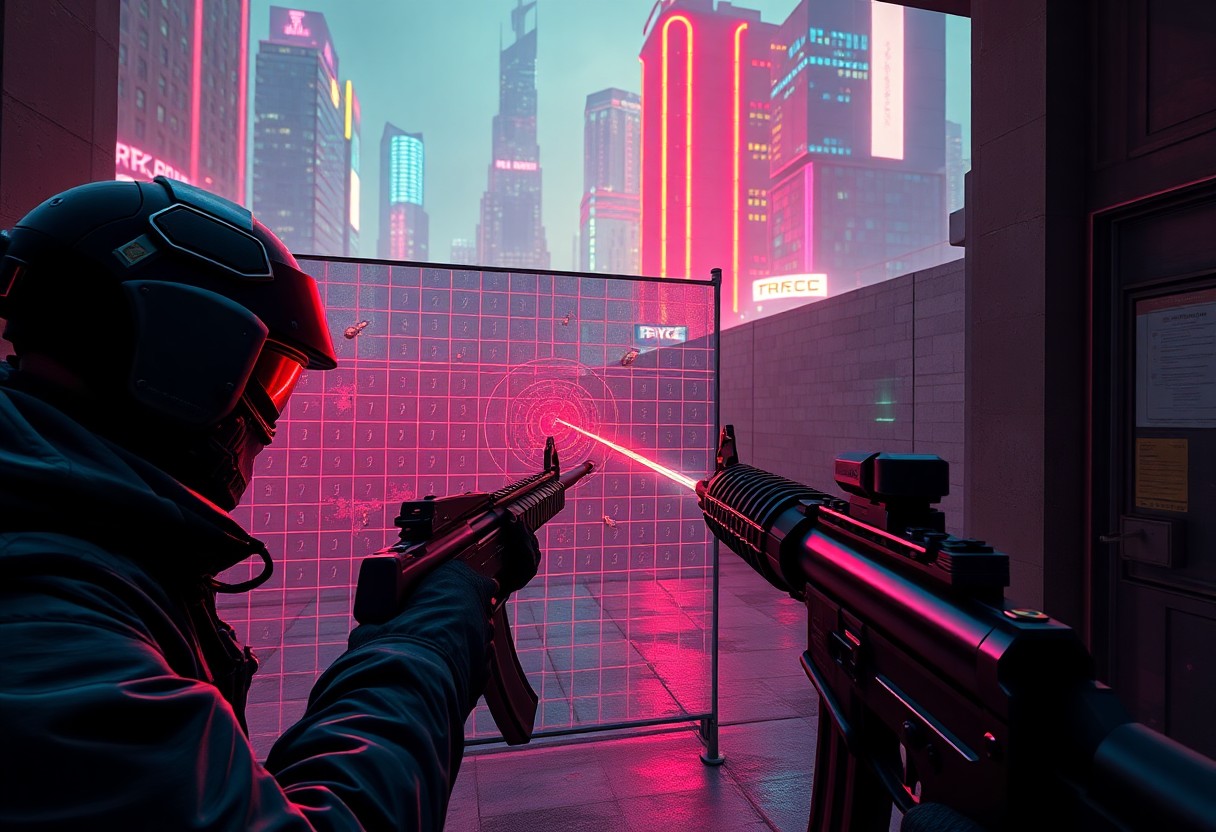
It’s imperative for players to understand recoil patterns and weapon accuracy in Counter-Strike. Mastering these fundamentals can significantly improve gameplay, allowing for more effective engagement with opponents. This guide will explore key techniques and strategies that enhance shooting precision and overall performance in the game.
The Mechanics of Weapon Inaccuracy
Differentiating Recoil Patterns from Dynamic Spread
Understanding recoil patterns involves recognizing consistent bullet trajectories following a series of shots. Dynamic spread, however, refers to increasing bullet dispersion resulting from movement or firing rapidly. Distinguishing between these two mechanics is vital for effective shooting in high-stakes situations.
The Impact of Movement Velocity on Shot Deviation
Movement velocity directly influences shot accuracy, leading to increased deviation as players maneuver in-game. Faster movements create larger bullet spreads, complicating precise targeting, particularly at longer ranges.
Shot deviation escalates with movement speed as players struggle to maintain control over their aim. When characters sprint or strafe, their accuracy diminishes, resulting in more erratic bullet placements. Comprehensive mastery over movement techniques is necessary to balance mobility and shooting accuracy, especially when engaging opponents in dynamic combat scenarios.
Technical Execution of Recoil Compensation
Mouse Displacement and Muscle Memory Development
Precision requires consistent mouse movement and practice. Regularly performing recoil control drills helps solidify muscle memory, allowing players to respond instinctively to the firearm’s kick. Over time, accurate movements become second nature, improving overall aim and weapon handling.
Utilizing Visual Tracers and Crosshair Feedback
Visual tracers and crosshair feedback provide immediate insight into shooting accuracy. Tracking bullet trajectories and observing crosshair dispersal aids in understanding recoil patterns, enabling players to adjust their aim dynamically during gameplay.
Visual feedback plays a key role in adjusting shooting techniques. When players analyze tracer lines and crosshair behavior, adjustments can be made on the fly, enhancing accuracy. This information allows for real-time correction, enabling effective adjustments in various scenarios.
Advanced Spray Transfer and Target Transitioning
Practicing spray transfer enables swift target acquisitions and efficient recoil management. Mastering this technique helps players smoothly shift focus between targets while maintaining accuracy, significantly enhancing their performance in firefights.
- Focus on crosshair placement.
- Anticipate target movements.
- Practice in different scenarios.
| Technique | Description |
|---|---|
| Spray Control | Maintaining accuracy during sustained fire. |
| Target Transition | Shifting between multiple targets quickly. |
Advanced spray transfer requires finesse and timing. Players should focus on maintaining a steady aim while transitioning between targets, ensuring minimal movement during the shift. This efficiency reduces the chance of missing shots and optimizes the speed of engagements.
- Practice with both stationary and moving targets.
- Incorporate movement into drills.
- Analyze performance after matches.
| Practice Method | Purpose |
|---|---|
| Deathmatch | Enhance reaction times and aim. |
| Training Maps | Refine spray patterns in controlled settings. |
Ballistic Profiles of Primary Weaponry
Analyzing the AK-47 “T” Pattern
The AK-47 exhibits a distinctive “T” pattern during sustained fire. Shots initially cluster around the crosshair, then progressively spread upwards and sideways, creating a characteristic trajectory. Mastery of this pattern enables players to effectively counteract recoil and improve accuracy in engagements.
M4A4 and M4A1-S: Comparing Kick and Recovery Time
Kick and recovery times of the M4A4 and M4A1-S differ significantly, influencing player choice based on playstyle. The M4A4 delivers a slightly higher rate of fire but has greater recoil, while the M4A1-S offers reduced kick and better control, making it preferred for precise shooting.
Kick and Recovery Time Comparison
| Weapon | Kick and Recovery Time |
|---|---|
| M4A4 | Higher recoil, slower recovery |
| M4A1-S | Lower recoil, faster recovery |
Players often prefer the M4A1-S for its advantageous kick and recovery time, making it ideal for accurate bursts. The M4A4, while capable of higher damage per second, demands extensive recoil control practice. Overall, understanding these differences can guide weapon selection based on tactical needs.
Detailed Kick and Recovery Insights
| Attribute | M4A4 vs M4A1-S |
|---|---|
| Rate of Fire | M4A4 offers a faster fire rate |
| Recoil Management | M4A1-S provides better control |
Movement Techniques for Maximum Precision
Counter-Strafing and Instant Accuracy Reset
Counter-strafing is an important technique that allows players to reset their accuracy while moving. By briefly pressing the opposite movement key, players can regain immediate control, blocking unwanted recoil. Mastering this technique is critical for hitting targets consistently during engagements.
The Role of Crouching in Pattern Compression
Crouching significantly impacts shot accuracy by compressing recoil patterns. This action stabilizes shooting, allowing players to maintain tighter groupings, especially when firing in bursts. While not always suitable, crouching can increase effectiveness in specific situations.
In-depth analysis shows that crouching reduces both horizontal and vertical spread, especially during sustained fire. Players often overlook this tactic, but using crouching effectively can enhance precision in intense firefights. Practicing the timing of crouch by integrating it with burst fire not only improves individual shot placement but also allows players to correct for recoil patterns more precisely, creating a tactical advantage in any encounter.
Strategic Firing Modes
The Efficiency of Tapping at Long Range
Tapping provides precision in long-range engagements, minimizing recoil impact while maintaining accuracy. This firing technique involves firing single shots at a controlled pace, allowing players to stay on target and make every bullet count, particularly against distant adversaries.
Burst-Fire Discipline and Reset Timing
Using burst-fire tactics allows players to control their weapon’s recoil effectively, improving hit rates in medium-range encounters. Players must be mindful of the weapon’s reset time to maximize effectiveness, waiting for the recoil pattern to settle before firing successive shots.
Effective burst-fire discipline relies on understanding the weapon’s recoil pattern and timing each burst accordingly. Players should train to recognize the pause after each burst, enabling a timely reset for the next round. Mastering this technique reduces wasted ammunition and enhances overall accuracy during skirmishes, turning each burst into a lethal drill rather than a chaotic spray.
Optimization and Training Methodologies
Specialized Workshop Environments for Pattern Practice
Creating a dedicated workshop environment facilitates focused recoil control training. These spaces often feature custom maps that allow players to practice specific spray patterns repeatedly, enhancing muscle memory and precision over time. Utilizing these environments can yield significant performance improvements in competitive play.
Analyzing Hit-Reg and Performance Data
Gathering and scrutinizing hit registration and performance data is important for identifying weaknesses in accuracy. Players can use various tools to monitor their gameplay metrics, allowing them to pinpoint inconsistencies in their shooting and adjust training regimes accordingly to improve overall effectiveness.
Data-driven analysis provides actionable insights into individual performance. Software tools can track metrics such as accuracy percentages, time to kill, and spray pattern effectiveness, giving players tangible benchmarks to evaluate their skills. Adjustments based on this feedback can lead to more tailored training sessions, enhancing proficiency in recoil control and overall aim.
Summing up
Recoil control and weapon accuracy are foundational skills in Counter-Strike. Mastering the mechanics of weapon handling significantly affects performance, allowing players to achieve better shot placement and consistency. Knowing the recoil patterns and adjusting aim accordingly leads to more effective engagements, ultimately contributing to a player’s success in competitive play.
Q: What is recoil control in Counter-Strike?
A: Recoil control refers to the player’s ability to manage the upward and sideward movement of a weapon while firing. Each weapon has a specific recoil pattern. Understanding and memorizing these patterns allows players to counteract the weapon’s natural movement, ensuring more accurate shots.
Q: How does weapon accuracy work in Counter-Strike?
A: Weapon accuracy is influenced by several factors, including firing mode, stance, and movement. Each weapon has a spread mechanism, which affects how bullets disperse from the point of aim. Standing still increases accuracy, while running or crouching alters it. Training and practice are vital for mastering these mechanics.
Q: What techniques can improve recoil control?
A: Several techniques can enhance recoil control. First, learn to use tap firing instead of holding down the trigger. Second, practice compensatory movements by pulling your mouse down opposite to the recoil. Finally, utilize training maps designed for recoil control to refine your skills and muscle memory.