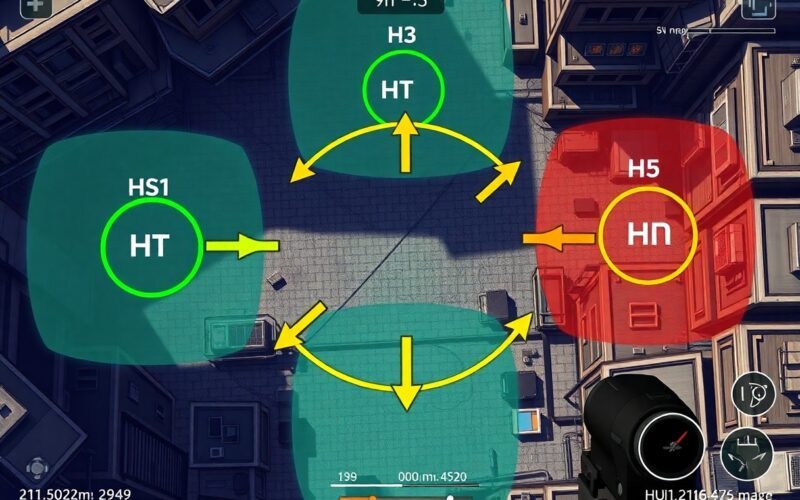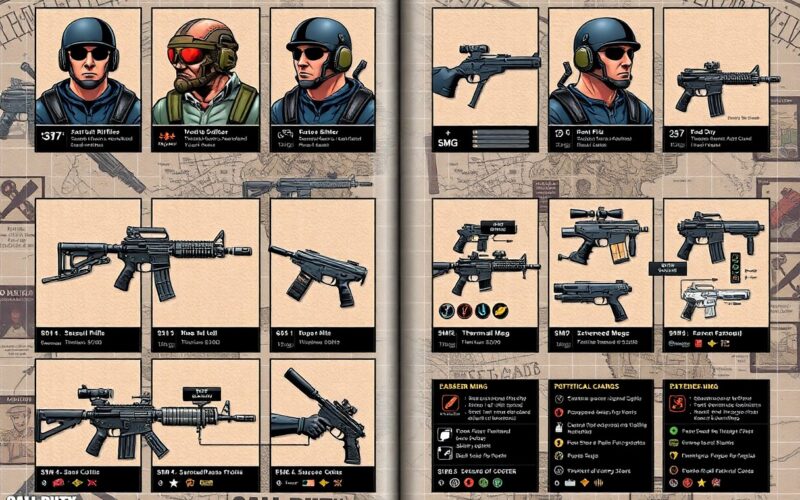
Basics of objective play in Call of Duty emphasize teamwork and strategy. Effective coordination among players can significantly influence match outcomes. Understanding roles, communication, and positioning lays the groundwork for dominating objectives and achieving victory.
The Fundamentals of Objective-Based Gameplay
Prioritizing Win Conditions Over Combat Statistics
Focus on the primary objective instead of personal kill counts. Winning requires understanding the game modes and adapting strategies to secure objectives, which often means sacrificing individual glory for the team’s success.
Understanding Spawn Influence and Map Pressure
Grasp how spawn points affect gameplay and influence team dynamics. Controlling map pressure enables teams to limit enemy movements and secure advantageous positions for objective play.
Spawn points dictate player reinforcements and can shift the tide of battle significantly. Teams must exploit map pressure to force opponents into unfavorable positions, creating opportunities to complete objectives while denying enemies valuable resources. By managing spawn influence effectively, teams can maintain control over critical areas, enhance teamwork, and improve their chances of securing victory.
Strategic Map Control and Positioning
Identifying and Securing Power Positions
Map control hinges on recognizing key locations that provide tactical advantages. Power positions offer elevated sightlines or cover, making it easier to engage opponents while minimizing exposure. Secure these spots early to dictate the flow of the game and support teammates effectively.
The Mechanics of Anchoring and Spawn Manipulation
Anchoring involves maintaining control over critical areas to influence enemy spawns. Building a solid anchor allows your team to dictate movement, forcing opponents into predictable pathways while securing strategic points.
Successful anchoring relies on communication and positioning. Teams must coordinate to establish boundaries that limit enemy movement, having one or more players remain vigilant in high-traffic areas. Spawn manipulation occurs when teams capitalize on map control, pushing opponents back and dictating when and where they re-enter the match. Understanding this cycle enhances overall effectiveness and leads to sustained dominance.
Defining Team Roles and Loadout Synergy
The Entry Slayer: Breaking Defensive Perimeters
Entry Slayers excel at spearheading assaults, disrupting enemy lines and clearing pathways for teammates. Their aggressive playstyle allows them to take first engagements, creating openings that facilitate team advances. Loadouts focusing on high mobility and rapid firepower are crucial for maximizing their effectiveness.
The Anchor: Securing Long-Term Map Control
An anchor’s primary responsibility is to maintain control over key areas of the map, providing stability and support to the team. They hold positions that deter enemy advances, allowing teammates to focus on objectives without the constant threat of flanking attacks.
Anchors typically choose loadouts designed for sustained engagements, featuring long-range weapons and defensive equipment. Their presence is fundamental to establishing map dominance, thereby enabling the entire team to maintain pressure on objectives. By communicating effectively with teammates, anchors can adapt to evolving situations, ensuring strategic advantages are consistently upheld throughout the match.
The Objective Specialist: Maximizing Point Efficiency
Objective Specialists focus on securing and maintaining game objectives, prioritizing point gains over kills. Their strategy centers on efficient gameplay that maximizes score potential while minimizing risks associated with aggressive playstyles. Loadouts tailored for utility and survivability enhance their effectiveness in high-pressure situations.
Objective Specialists should adopt loadouts that emphasize equipment designed for capturing and defending points. By coordinating with teammates, they ensure that objectives are secured quickly and maintained throughout the match. These players should also communicate efficiently, informing their team of threats and coordinating efforts to defend captured areas, ensuring they capitalize on objectives and increase overall team score.
Communication Protocols and Tactical Callouts
Standardizing Map Terminology for Precision
Consistency in terminology enhances clarity during gameplay. Adopting uniform names for map locations allows team members to communicate complex strategies quickly, minimizing confusion and misinterpretations in critical moments.
Effective Real-Time Intel and Status Reporting
Rapid information exchange keeps teams informed about enemy positions and current status. Providing timely updates, whether through voice chat or in-game signals, ensures every member can make informed decisions during engagements.
Clear communication of status updates should include enemy sightings, health conditions, or area control. Establishing a routine for reporting this intel, including standardized phrases or signals, enables teams to respond quickly and cohesively, maximizing their chances of victory during high-stakes scenarios.
Mode-Specific Execution Strategies
Domination: Maintaining Map Balance and Avoiding Flips
Controlling key areas is necessary in Domination. Focus on maintaining balance across capture points to prevent enemy spawn flips. Communication is key; coordinate with your team to prioritize capturing and holding objectives, ensuring that one area doesn’t dominate the others.
Hardpoint: Rotation Timing and Managing Scrap Time
Timing rotations is critical in Hardpoint. Teams must transition smoothly from one point to the next, securing positions while managing scrap time effectively to earn valuable points.
Proper rotation involves anticipating the next Hardpoint location and pre-emptively positioning teammates. Utilize the final few seconds at each point to gather kills and ensure your team can shift quickly. Maintaining map awareness allows for better control of engagements and less time wasted between rotations.
Search and Destroy: Trade Kills and Utility Management
In Search and Destroy, trading kills is paramount. Teams should communicate effectively to manage utility usage, ensuring grenades and tactical equipment bolster offensive and defensive pushes.
Strategic play in Search and Destroy hinges on coordinated aggression and utility deployment. Teams benefit from knowing when to engage and when to hold back, especially during bomb plant scenarios. Trade kills allow teams to maintain numerical advantage, while smart utility deployment can force enemies into unfavorable positions, creating opportunities for decisive plays.
Advanced Team Coordination and Re-clearing
|
Synchronizing Lethal and Tactical Equipment Usage
Maximizing the impact of lethal and tactical equipment enhances teamwork. Coordinating when to use grenades, smoke, or stuns can disrupt enemy plans while covering your team’s advancement or retreat. Shared timing leads to more effective executions, reducing the risk of friendly fire and increasing the chances of achieving objectives.
Coordinated Retakes and Breaking Established Setups
Coordinated retakes rely on a well-structured approach to reclaiming control from the enemy. Teams should communicate roles clearly, using diverse angles and timing to overwhelm opponents. Effective execution hinges on teamwork, forcing the enemy into a defensive position and regaining maps or objectives quickly.
Gaining back control requires precise execution. Set up distractions-like smoke grenades or decoy deployments-to divert enemy attention. Ensure teammates utilize off-angles, enveloping the opposition from multiple sides. When attackers commit to a high-traffic area, a focused counter-offensive with coordinated firepower can dismantle their defenses and reclaim objectives.
The Fundamentals of Trade Killing and Numbers Advantage
Mastering trade killing is necessary for maintaining numerical superiority in firefights. Encouraging players to prioritize covering teammates fosters a safer environment for engagements. As players fall, trading kills effectively can shift the tide by keeping opponent numbers low and prolonging team survival.
Understanding trade killing’s mechanics facilitates better decision-making during encounters. Emphasize the necessity of taking calculated risks to secure advantageous trades. When one player engages, the rest must position themselves for immediate support or follow-up attacks. This synchronized approach ensures that even in a numbers disadvantage, teamwork can turn fights in your favor.
Conclusion
Objective play and team coordination form the backbone of success in Call of Duty. Effective communication and clear roles enhance strategies, ensuring that players can capitalize on each other’s strengths. Mastering these fundamentals significantly increases a team’s chance of victory, making practice and collaboration vital for any competitive player.
Q: What are the key objectives in a Call of Duty match?
A: Objectives include capturing flags in Domination, planting or defusing bombs in Search and Destroy, and securing points in Hardpoint. Each mode has specific goals that require teamwork and strategic planning to achieve victory.
Q: How can players improve team coordination during gameplay?
A: Players should use voice chat or in-game communication tools to share information about enemy positions, strategize attacks, and coordinate movements. Setting designated roles, such as sniper or assault player, helps create a structured team dynamic.
Q: What strategies can help with achieving objectives efficiently?
A: Focusing on map control is crucial for accessing objectives. Players should spread out to cover different areas while providing support to teammates. Flanking enemies and using equipment like UAVs or gas grenades can disrupt opposition and facilitate objectives.