






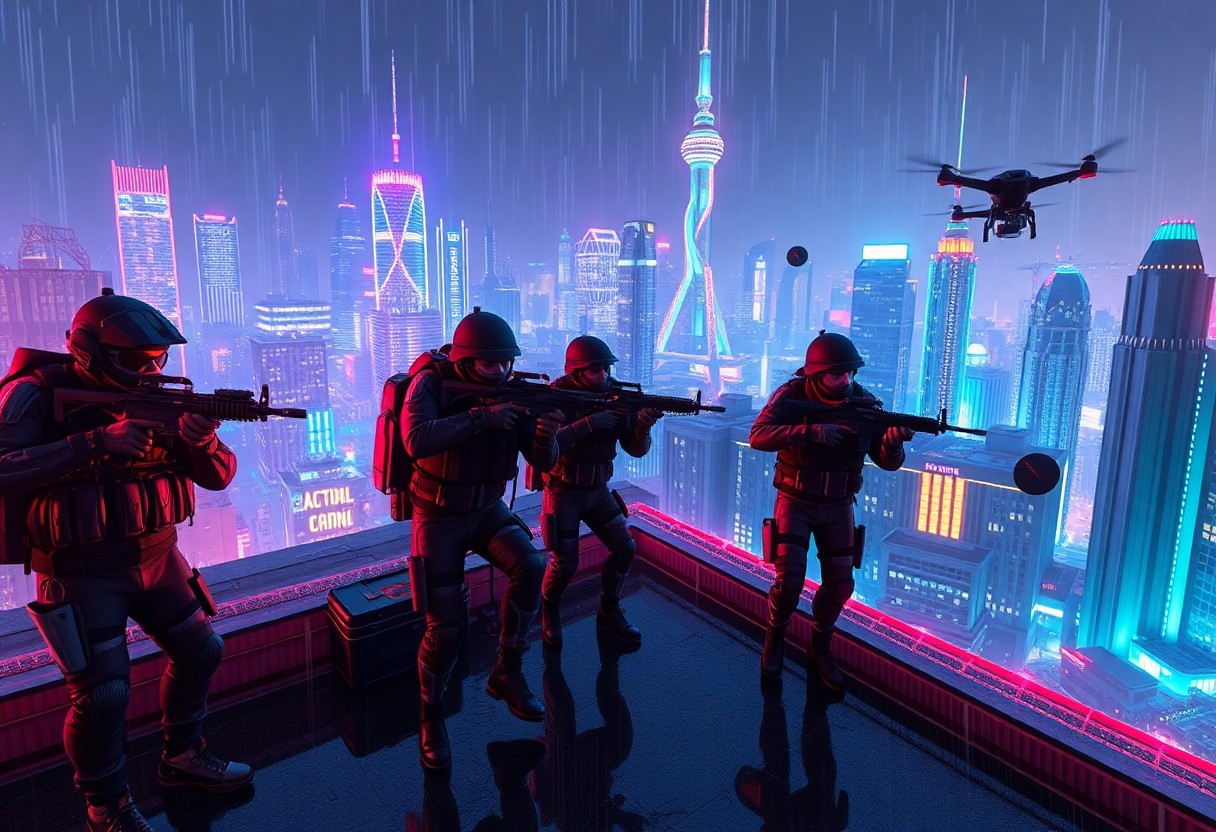
You need to understand the different roles in a Call of Duty team and how effective coordination can lead to victory. Each player has unique responsibilities, and when executed properly, these roles enhance teamwork and strategy in competitive gameplay.
Primary Individual Roles in Professional Play
The Main AR: Holding Lanes and Anchoring Spawns
The main Assault Rifle (AR) player duties involve controlling critical lanes and ensuring team spawns are secure. This role demands precision shooting and map awareness to dominate long-range engagements while setting up defensive positions that protect the team’s backline.
The Entry Submachine Gunner: Creating Space and Pressure
Entry SMGs focus on initiating engagements, making swift moves to apply pressure on opponents. Their agility allows them to breach enemy lines, creating opportunities for teammates to follow up and secure map control.
Entry SMG players must excel in quick decision-making and precise gunplay, often leading the charge into contested areas. They utilize speed and unpredictability to overwhelm defenders, forcing enemies into difficult situations. Effective coordination with teammates is imperative, as the entry fragger opens pathways for strategic advances and enables the team to capitalize on disarray among opponents.
The Slayer: Map Control through Elimination Efficiency
The Slayer’s primary focus revolves around reducing enemy numbers, thereby exerting control over the map. This role combines skillful gunplay with tactical positioning, allowing for efficient takedowns that disrupt enemy strategies.
Slayers must maintain a sharp focus on high-impact engagements, often playing in tandem with other roles to maximize effectiveness. By eliminating threats quickly, they create windows for objectives to be secured or areas to be dominated. Their ability to consistently win gunfights not only supports the team’s push but also demoralizes opponents, shifting the momentum in the game. Communication with teammates is key to ensuring that flanks and support play into their damage output, solidifying their role as team enforcers.
Strategic Leadership and Support Functions
In-Game Leadership (IGL): Macro Decision-Making and Directives
IGLs play a pivotal role in steering the team’s overall strategy during matches. They analyze real-time situations, directing team movements and adapting tactics based on enemy behavior and map control. Their ability to communicate effectively ensures the team remains focused and coordinated, even in high-pressure scenarios.
The Flex Role: Adapting to Mid-Match Meta Shifts
Flex players adjust their roles dynamically based on evolving match conditions, ensuring the team remains competitive. This adaptability allows them to switch between offensive and defensive playstyles, aligning with the team’s needs and the enemy’s strategies.
Flex players excel by recognizing opportunities to counter opponents or support teammates. They assess which weapons or strategies will best exploit weaknesses while continuously adapting to shifts in the game. This versatility not only enhances team performance but also stresses the importance of player awareness and communication in competitive settings.
Support and Utility Optimization: Tactical Equipment Usage
Strategic use of tactical equipment can significantly influence the outcome of engagements. Support roles are responsible for deploying devices like smoke grenades or stun grenades, enabling their teams to gain advantageous positions or disrupt enemy movements.
Effective support involves timing, placement, and an understanding of the map dynamics. Players must anticipate enemy actions to maximize the utility of their equipment, creating openings for their teammates. This intricate dance of communication and execution underlines the importance of support roles in shaping the flow of a match, ultimately contributing to the team’s success.
Coordination Dynamics in Objective-Based Modes
Hardpoint: Rotation Timing and Scrap Time Management
Effective rotation timing is key in Hardpoint, allowing teams to control score points while managing scrap time effectively. Prioritizing the next location ensures a smooth transition and maximizes point accumulation.
Search and Destroy: Trade Fragging and Post-Plant Defense
Trade fragging is vital in Search and Destroy, where teammates can cover each other’s positions. After planting, solid post-plant defense strategies ensure the team secures the round effectively.
Mastering trade fragging often dictates the flow of a Search and Destroy match. Teams must position themselves to support each other, allowing for quick eliminations while minimizing risks. Following a successful plant, defenders should establish strong sightlines and crossfires, creating multiple angles of attack for the opposing team, thereby increasing the likelihood of winning rounds.
Control: Lives Management and Tick Progression Strategies
In Control, managing lives and focusing on tick progression are vital for securing objectives. Teams must balance aggressive plays while ensuring enough respawns remain for sustained pushes.
Lives management in Control directly impacts a team’s ability to pressure objectives effectively. Maintaining a close watch on tick progression allows teams to prioritize pushing one point while defending another. Coordination among teammates ensures that players can assist each other without overcommitting, thus preserving lives while keeping the pressure on opponents and advancing the tick count to secure objectives.
Communication Systems and Information Architecture
Standardized Callouts and Directional Accuracy
Callouts should be concise and consistent across teams to ensure clear communication. Each location on the map needs specific identifiers, allowing players to relay enemy positions quickly and accurately. This clarity enhances team coordination, enabling efficient tactical responses during engagements.
Comms Discipline: Minimizing Noise During High-Stress Engagements
Streamlined communication reduces confusion in critical moments. Players must minimize unnecessary chatter to maintain focus during intense firefights. This discipline helps teams respond effectively and adjust strategies rapidly, improving overall performance.
Maintaining comms discipline requires training and practice. Teams should establish specific guidelines on what to communicate during tense scenarios, prioritizing vital information over fluff. Regular drills can help players recognize and suppress distractions, instilling habits that lead to quicker decision-making in competitive settings.
Team Synergy and Environmental Awareness
Cross-Firing and Pinching: Multi-Angle Engagement Tactics
Cross-firing and pinching tactics require team members to engage enemies from multiple angles simultaneously, leading to increased pressure and confusion. By coordinating movements, players can effectively eliminate threats while minimizing their own risk, enhancing overall tactical effectiveness during encounters.
Revenge Killing and Effective Trading Mechanics
Effective trading mechanics involve players sacrificing their lives to eliminate opponents, ensuring that each death leads to a favorable exchange. Revenge killing amplifies this, where teammates swiftly avenge fallen allies, maintaining momentum and morale while staggering enemy advances.
Utilizing effective trading mechanics hinges on understanding engagement dynamics. When a teammate gets eliminated, swift retaliation not only avenges their death but also instills fear in the enemy. Teams can maintain balance by prioritizing trades, emphasizing the necessity of calculated aggression to keep pressure on opponents and avoid losing control of the momentum.
Spawn Manipulation and Map Influence
Spawn manipulation entails strategically controlling spawn points to restrict enemy movement and create advantageous scenarios. By influencing spawn dynamics, teams can dictate the flow of the match, making it challenging for opponents to regroup or counter effectively.
In competitive gameplay, spawn manipulation is crucial for asserting dominance on the map. Controlling specific areas can predict enemy spawn locations, enabling teams to set traps and ambushes. Additionally, presence in key zones forces opponents into unfavorable positions, thus maximizing map leverage and optimizing engagement outcomes while disorienting the enemy team.
Tactical Preparation and Performance Analysis
VOD Review: Identifying Breakdown in Coordination
VOD reviews provide a detailed opportunity to assess teamwork and communication. Focusing on key moments where players misaligned reveals gaps in coordination. Scrutinizing footage helps pinpoint specific instances where strategies failed, allowing teams to discuss solutions effectively. By analyzing these breakdowns, squads can enhance their synergy for future matches.
Conclusion
As a reminder, effective team roles and coordination in competitive Call of Duty modes enhance gameplay and strategy. Each player’s specific role contributes to team success, requiring clear communication and strategic planning. Understanding these roles allows teams to adapt quickly to opponents, improving overall performance in high-stakes matches.
Q: What are the primary roles in a Call of Duty competitive team?
A: The primary roles typically include the following:
1. Leader/Shotcaller: Makes strategic decisions and directs team movements.
2. Sniper: Provides long-range support, picking off enemies from a distance.
3. Assault Player: Engages in frontline combat, handling most engagements with enemies.
4. Support Player: Offers assistance to teammates, managing objectives and providing cover.
5. Entry Fragger: Often takes the first contact during engagements, leading assaults into enemy positions.
Q: How can teams improve communication during competitive matches?
A: Teams can enhance communication by implementing specific callouts for each map, rehearsing key strategies, and conducting regular practice sessions. Using voice chat tools effectively helps clarify intentions and objectives in real-time. Prioritizing concise, clear communication minimizes confusion and ensures everyone understands their role during matches.
Q: What strategies enhance coordination among team members in competitive modes?
A: Setting predefined roles and responsibilities ensures each member knows what to focus on during gameplay. Regular practice focusing on teamwork scenarios builds familiarity with each member’s playstyle. Reviewing recorded matches helps identify areas for improvement in coordination and execution of strategies.